Most cost-of-living articles about Medellín give you a single number and a photo of a balcony. The number is usually fine. The problem is what it hides: a rent figure that quietly excludes utilities and building fees, a grocery line that assumes you never eat out, and a dollar conversion from whenever the article was written.
So here is the receipt instead. Every line a real month costs, in Colombian pesos first — because that is the currency your landlord, your supermarket and the Metro actually charge in — and then in dollars at the rate we use across this site, COP 3,210 to the dollar. Where a number is ours, we say so. Where it is the market's, we say that too.
Rent: the line that decides the rest
Rent is between 40 and 55 percent of a normal month here, so it is the number to get right. It also comes in two very different shapes, and the shape matters more than the neighborhood.
An unfurnished lease is the cheaper headline and the more expensive month. The quoted rent excludes the building's administración fee, every utility, internet, and the furniture you now have to buy, and it comes with a twelve-month contract and a guarantor requirement that most newcomers cannot meet. We wrote the whole story of that wall in the fiador and deposits article.
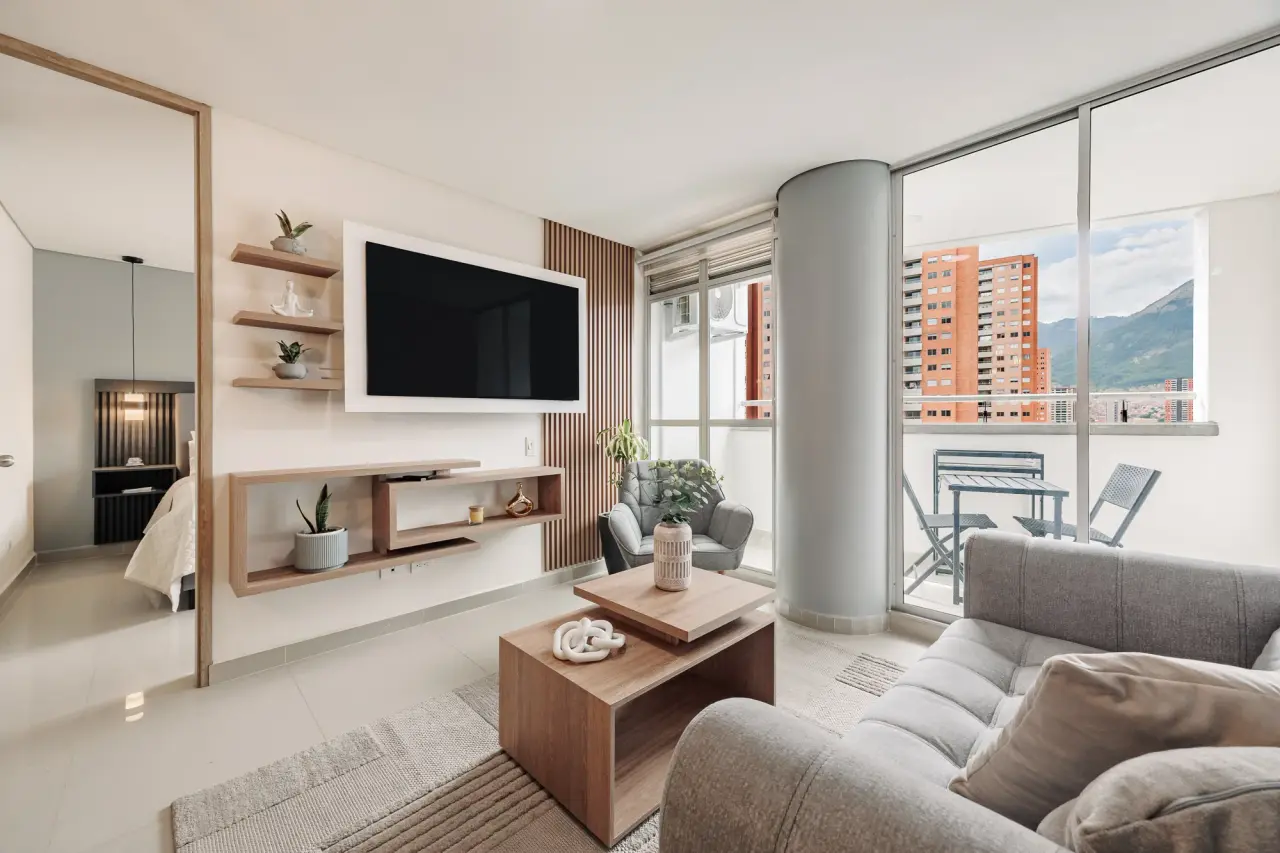
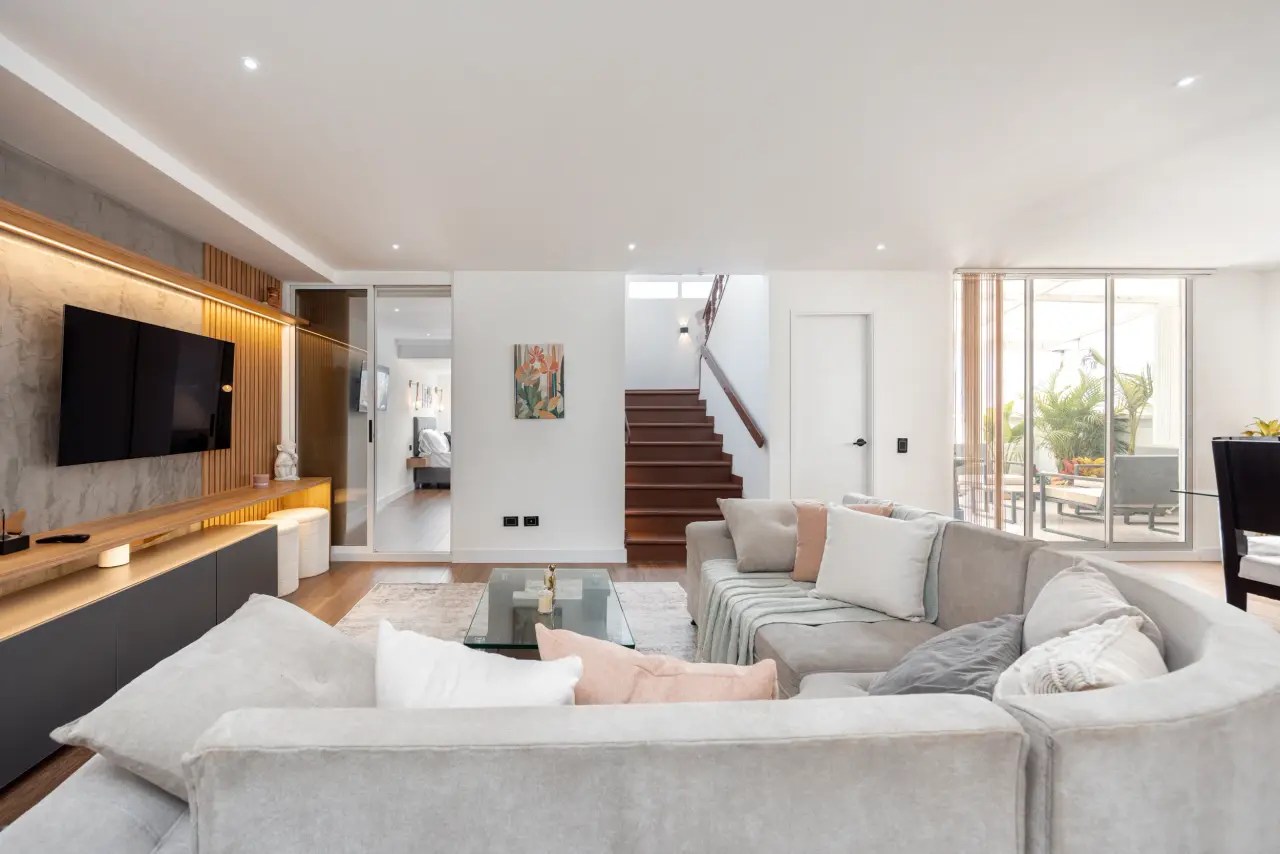
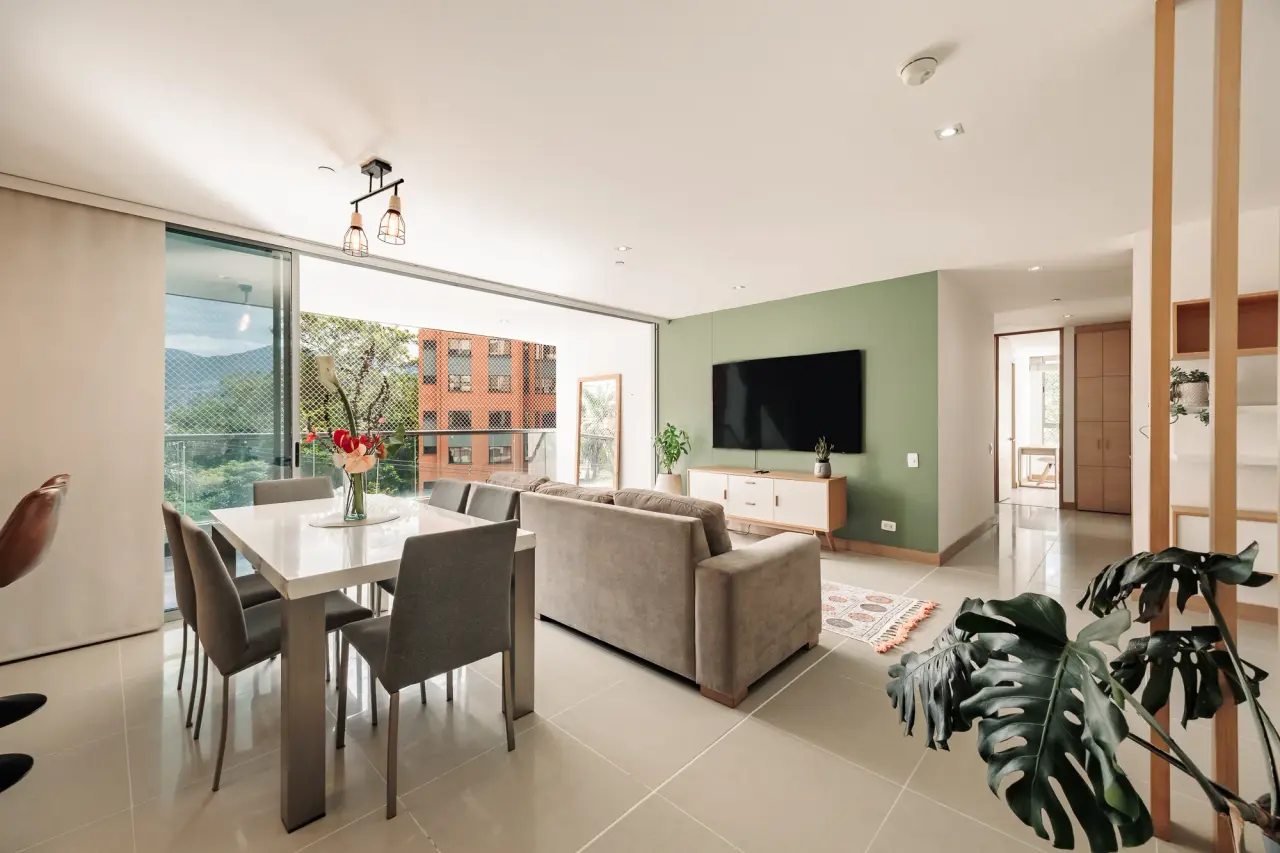
A furnished monthly rental is the higher headline and the smaller surprise. The price is the price: furniture, kitchen, linens, internet, utilities and the building fee are inside it, the contract runs month to month or for the stay you choose, and nobody asks you for a Colombian co-signer. That is the shape this budget assumes, because it is the one a person arriving from abroad can actually sign this week.
What the market charges for a furnished one-bedroom in mid-2026, from what we see and what we quote: Laureles and Estadio, roughly COP 2.8 to 4.5 million (US$870 to 1,400). Envigado and Sabaneta, COP 2.5 to 4 million (US$780 to 1,250). El Poblado, COP 3.5 to 7 million (US$1,090 to 2,180), with the top end buying a view and a doorman who knows your name. Bello and Centro, where the Metro is a walk and the rents have not caught up with the light, COP 2.2 to 3.5 million.
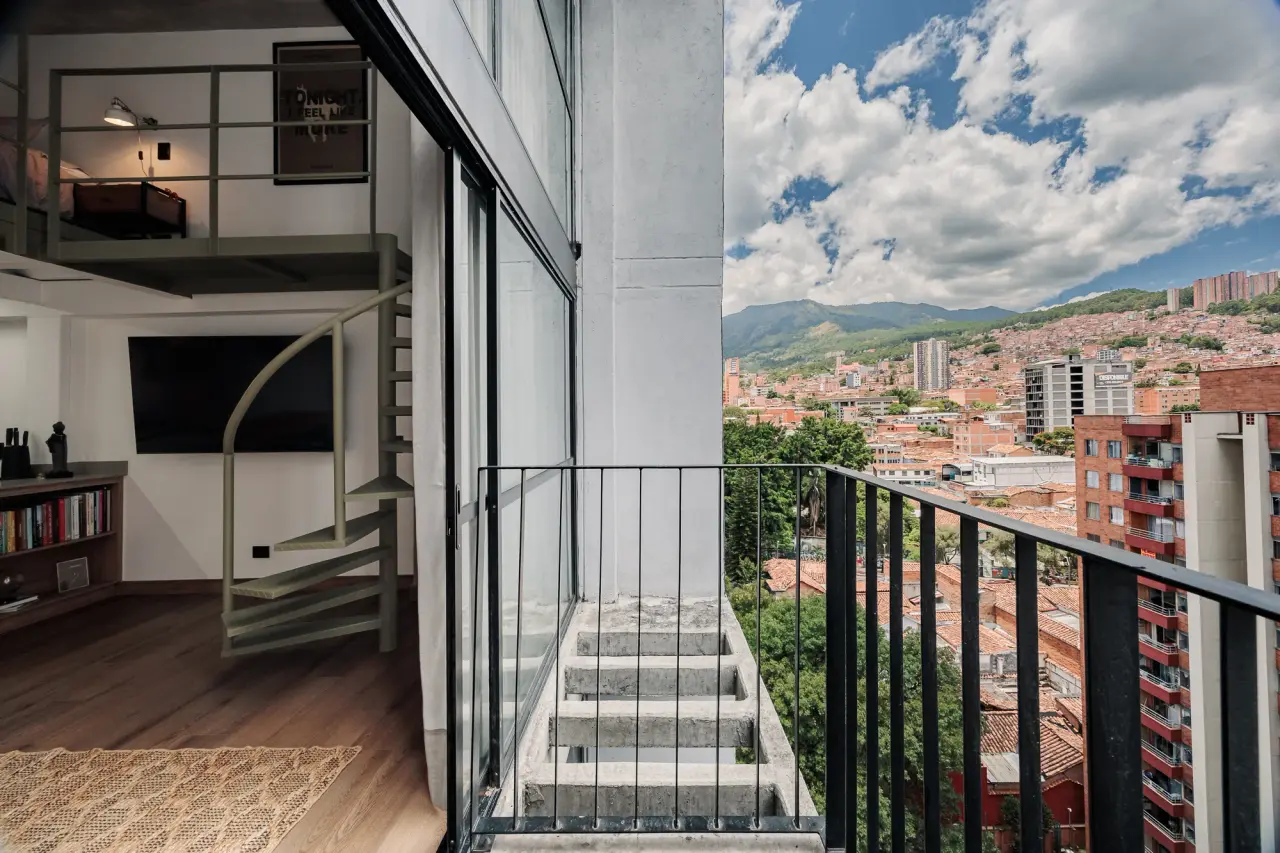
Our own numbers, for the record: a private room in a managed house in Sabaneta from COP 1.2 million a month, and a whole furnished home from COP 3.0 million — our six-month price on a one-bedroom loft two blocks from Metro Prado — up to about 7.5 million for a large two-bedroom with the Poblado skyline in the window. You can see every one of them, with the price on the card, on the rentals page.
Utilities and administración: already paid, if you rent furnished
Colombia bills electricity, water, gas and rubbish on a sliding scale called estrato, one to six, set by the neighborhood and the building. A one-bedroom in estrato four or five typically runs COP 250,000 to 450,000 a month across all of them, more with air conditioning, which almost nobody in Medellín needs — the city sits at 1,500 meters and the year-round average is around 22 degrees.
Administración is the monthly fee every apartment building charges for the doorman, the elevator, the pool and the gardens. In a decent building it is COP 250,000 to 700,000. On an unfurnished lease it is your problem. On a furnished monthly rental it is inside the rent, which is the single biggest reason two apartments with the same headline price can be COP 800,000 apart in real cost. If you want the mechanics, this guide takes the bill apart line by line.
Internet is the same story: a 300 Mbps fiber line costs COP 90,000 to 150,000 a month if you contract it yourself, and zero if it came with the apartment. Ask for the speed as a number before you sign anything. A good landlord has it ready.
Food: the cheapest good meal on the continent
A menú del día — soup, a main with rice, beans, plantain and a protein, and a fresh juice — is COP 15,000 to 22,000 (US$5 to 7) in any neighborhood. It is how half the city eats lunch, and it is the reason a solo budget can be so low without anyone feeling poor.
Groceries for one person who cooks most nights run COP 500,000 to 800,000 a month (US$155 to 250) at a supermarket like Éxito, Carulla or D1, and noticeably less if you buy fruit and vegetables at a plaza de mercado — Placita de Flórez in the center or the Minorista, where a week of produce is a fraction of the supermarket price and the mangoes are better.
Dinner at a good restaurant in Laureles or Provenza is COP 60,000 to 120,000 a head with a drink. A specialty coffee is 6,000 to 9,000. A local beer is 6,000 in a corner shop and 14,000 where the music is good. Eating out twice a week and cooking the rest lands a single person around COP 900,000 to 1.3 million for the month, all in.
Getting around: the Metro is the budget's best friend
Medellín is the only Colombian city with a Metro, and it changes the math. A ride is a little over COP 3,000 with a Cívica card, cable cars included, and a person who commutes daily spends COP 120,000 to 160,000 a month. Living within a ten-minute walk of a station — Laureles, Estadio, Envigado, Sabaneta, Bello and the center all qualify — is the cheapest lifestyle upgrade in the city.
Ride-hailing fills the gaps: COP 8,000 to 20,000 for a trip inside the valley, 90,000 to 130,000 from José María Córdova airport up on the plateau. A car is a cost, not a need. Almost nobody we host has one.
Work, health, phone, gym: the lines people forget
Coworking is COP 250,000 to 500,000 a month for a dedicated desk in Laureles or Poblado, and free if a café with fast wifi and a patient waiter counts, which in Medellín it does. Most people who work remotely do a mix, and most of our apartments are chosen with a real desk in them for exactly that reason.
Health cover: travel insurance or an international plan runs US$60 to 120 a month for a person in their thirties, and a private consultation without any plan is COP 150,000 to 250,000. Anyone staying long enough for a visa usually moves to a Colombian prepaid plan, medicina prepagada, at a similar monthly cost with far better access.
A prepaid SIM with 20 to 30 GB is COP 40,000 to 60,000 a month from Claro, Tigo or Movistar, bought at the airport in five minutes with a passport. A gym is COP 90,000 to 200,000, a yoga studio about the same, and the Ciclovía on Sunday mornings is free.
The whole receipt
Put it together for one person in a furnished one-bedroom near a Metro station, cooking most nights and out twice a week: rent COP 3.2 million, utilities and building fee zero because they are inside it, groceries 650,000, eating and drinking out 500,000, Metro and the odd ride 200,000, phone 50,000, coworking 300,000, health 300,000, gym 120,000. About COP 5.3 million — US$1,650 — for a month that would cost three times that in Miami and feel considerably worse.
A couple sharing a two-bedroom in Envigado or Laureles lands around COP 7 to 8.5 million. A person who wants Poblado, Provenza dinners and a rooftop pool can spend COP 10 million and still come in under a studio in Austin. And a person in a private room in one of our managed houses, cooking in a shared kitchen, can live well on COP 3 million.
The honest summary: Medellín is not cheap because things are bad. It is cheap because the peso is cheap, the Metro works, lunch is COP 18,000, and a furnished home comes with everything already switched on. Pick the home first. Everything else on this list follows from where you sleep.